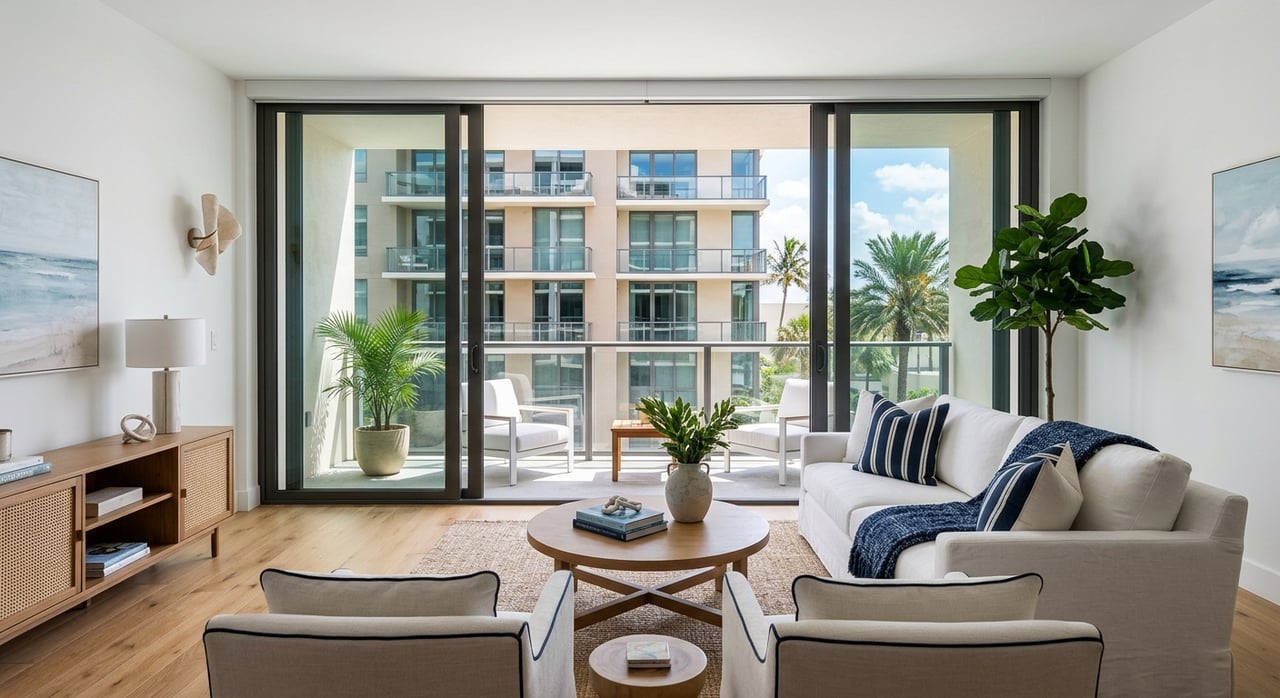
Your Downtown Sarasota Lifestyle Guide to Car-Light Living
June 18, 2026
June 18, 2026
Wondering if you can enjoy Sarasota without spending half your week in the car? In downtown Sarasota’s walkable core, that idea is more realistic than many buyers expect. If you want a home base near dining, waterfront parks, culture, and everyday conveniences, this guide will help you understand what car-light living really looks like here. Let’s dive in.
Downtown Sarasota is intentionally compact, and that shapes the way daily life works. According to the City of Sarasota’s Downtown Improvement District, the district covers about 84 acres and includes 941 housing units, 567 households, and 5,648 employees.
The district generally extends north to Second Street, east to Goodrich Avenue and Pine Place, south to Ringling Boulevard, southwest to Palm Avenue, and west to Cocoanut Avenue. The city’s future land-use plan describes the Downtown Core and Downtown Bayfront as fully mixed-use, walkable districts with homes, shops, workplaces, recreation, and other uses in close proximity.
That planning framework matters if you are comparing downtown Sarasota with more suburban parts of the county. The core is designed to support walking and active street life, not just residential use separated from everything else.
A car-light lifestyle usually means you still own a car, but you use it less often. In downtown Sarasota, that can work because so many daily and leisure destinations are close together.
The city describes downtown as a place to shop, dine, and enjoy cultural amenities. The Bay Runner also frames the area as a connected district for dining, nightlife, arts, leisure, and recreation.
For many buyers, the appeal is simple: you can step outside and have options. Instead of planning every outing around a drive, you may be able to walk to dinner, head to a weekend event, or spend time by the water without leaving the downtown area.
One of the most practical signs of a walkable district is whether your routine can happen nearby. Downtown Sarasota supports that rhythm with a mix of businesses, restaurants, public spaces, and recurring events.
The Sarasota Farmers Market is a year-round Saturday tradition in the heart of downtown at Main Street and Lemon Avenue. For residents, that adds an easy weekly routine that feels more like a neighborhood habit than a special trip.
Waterfront access also changes the experience of downtown living. The Bay preserves 53 acres along Sarasota Bay and offers free programs and events, while Bayfront Park includes amenities such as a playground and splash pad.
That mix gives downtown a balance many buyers want. You get an urban setting, but you also stay connected to open space, bay views, and outdoor activity.
Downtown Sarasota also stands out for how much culture is packed into a relatively small area. The Sarasota Opera House sits in the heart of downtown near Selby Library, the Van Wezel is on Sarasota Bay near downtown, and Art Center Sarasota offers galleries, classes, and events in the downtown and bayfront area.
If you value easy evening plans, this density is a real advantage. You can enjoy performances, exhibits, and events without the longer drive that often comes with suburban living.
For second-home buyers and downsizers, that convenience can be especially appealing. A lock-and-leave lifestyle tends to feel more complete when entertainment and recreation are already built into the surrounding area.
Housing in downtown Sarasota reflects the area’s mixed-use planning. The city’s land-use classifications allow single-family and multiple-family dwellings, live-work flexhouse structures, and buildings that can support single or multiple uses.
The broader downtown planning framework also identifies forms such as duplexes, triplexes, courtyard buildings, cottage court homes, townhomes, and multi-dwelling structures. Retail and office uses are often oriented to pedestrians on lower floors.
In practical terms, buyers should generally expect more condominiums, attached homes, apartments, and mixed-use formats than large detached suburban-style lots. That is one reason downtown often appeals to people who want lower-maintenance living and quick access to amenities.
Even in a walkable district, parking still matters. The City of Sarasota says downtown has more than 1,300 covered spaces, about 3,000 public parking spaces citywide, and 1,100 metered spaces.
Downtown garages include the Palm Avenue Garage, State Street Garage, and 2nd Street Garage. The city notes that no back-in parking is permitted in garages.
The 2nd Street Garage is across from Whole Foods, while the Palm Avenue and State Street garages offer the first hour complimentary after a plate is registered. The city also says garages are generally paid 24 hours, with a Sunday free-parking exception from 7 a.m. to 1 p.m.
For buyers, this is an important reality check. Downtown can reduce how often you drive, but parking rules, garage access, and building-specific parking arrangements are still part of the lifestyle.
Transit adds another layer of convenience for downtown residents. The Bay Runner is a complimentary trolley service that runs seven days a week and connects downtown Sarasota with St. Armands Circle and Lido Key.
Sarasota County also provides trolley service from downtown to Siesta Key and from downtown to Lido Key through Route 77 and Route 78. Route 78 operates with roughly 30-minute frequency.
This network makes it easier to enjoy beach and shopping destinations without always moving your car. If your goal is to drive less, these services make downtown living more flexible than many people assume.
Downtown Sarasota is not static, and that is part of its appeal. The Downtown Improvement District funds Fresh Fridays, a monthly block-party series, along with holiday lighting, beautification, and sidewalk and streetscape improvements.
The city also highlights recurring and seasonal downtown events such as the Downtown Sarasota Festival of the Arts, the Downtown Sarasota Fine Art and Craft Fair, Rocktoberfest, and the Memorial Day Parade. The Bay adds more free recurring programs and events throughout the year.
For residents, this means some weekends and evenings will feel especially lively. It also means parking and street access may feel tighter during major events, which is worth factoring into your expectations.
Downtown Sarasota tends to fit buyers who want a low-driving, amenity-rich lifestyle centered on convenience. If you like the idea of being close to dining, parks, cultural venues, waterfront spaces, and beach connections, the area offers a strong match.
It can be especially appealing if you are looking for a lock-and-leave condo or another lower-maintenance home format. Many seasonal residents, downsizers, and second-home buyers are drawn to that combination of access and simplicity.
On the other hand, your needs may point elsewhere if you expect frequent big-box errands, want substantial private yard space, or prefer a more traditional suburban setup. Downtown works best when your lifestyle aligns with its compact, mixed-use design.
Before choosing a downtown Sarasota home, it helps to think beyond the floor plan. The lifestyle is shaped just as much by location, mobility, and daily routine as it is by the residence itself.
Here are a few questions worth asking:
The right downtown purchase is not only about owning in Sarasota. It is about choosing a home that matches the way you actually want to live.
If you are weighing downtown Sarasota against the islands or other Sarasota neighborhoods, a local comparison can help you narrow the best fit. Team Dunn FL can help you evaluate lifestyle, housing options, and day-to-day convenience so you can move with confidence.
Stay up to date on the latest real estate trends.
Reach out to Team Dunn for expert real estate services. Buy, sell, or rent properties with confidence. Contact us today!